From your perspective as a leader in the U.S. innovation ecosystem, how would you describe the current state of the American startup ecosystem?
It’s certainly very vibrant. Since the country was established, it has been characterized by entrepreneurial thinkers. Every success story—many of which are well known around the world—has come about because of the entrepreneurial attitude and cultural mindset that you need to have, no matter what you do. Even if you're going to work for a large company, you need to know how to think like an entrepreneur—always looking to change and adapt to the market—because that's why big companies succeed.
You have experience in both the American and Hungarian ecosystems. How would you describe the entrepreneurial mindset in America compared to the Hungarian mindset?
In America, entrepreneurs are generally very quick and eager to ask for help and to find the organizations that are there to support them. What I’ve observed so far
in Hungary is that a lot of entrepreneurs don’t necessarily realize that there are probably organizations available to help them. They may not be as quick to ask for help or to get the coaching and advising that can make all the difference in whether they even survive their first year.
But once they realize that assistance is available, they take full advantage of it.
What do you think are the biggest advantages and disadvantages of the American ecosystem?
That’s a question I don’t think anybody has ever asked me. The first thing that comes to mind as an advantage is that it’s very easy to start a company. Anybody can start one because we were born as the land of promise and opportunity. So many people think, “I can be an entrepreneur.”
The disadvantage of that is that everyone thinks they can be an entrepreneur. Many times, individuals don’t realize the importance of the planning, the research, and the analysis that they need to do before jumping into starting a company.
It’s interesting because a French founder said almost the exact same thing—not about the American, but about the French ecosystem. So maybe it’s an advantage-disadvantage pair across borders and seas. But back to the U.S.: How much do politics—especially Donald Trump’s current tariff policies—influence the functioning of the ecosystem?
The political impact tends to be more at the local level, not so much at the federal level, because many organizations that support entrepreneurs and startups tend to be locally funded.

The current administration—and frankly, almost every administration—has supported small, innovative companies. Every administration has recognized the importance of these businesses, because through their ability to create products and services, the U.S. can become more competitive and remain competitive in critical areas. They are vital to the economy, to national security—everything.
How about the transatlantic relations?
What we’re seeing now is that with some Asian countries, the U.S. is not as friendly at the moment, so we won’t see as much activity from those regions. However, there are countries like Hungary where the relationship is just beginning to really blossom. I think we’ll just see some geographic shifts in U.S. partnerships with other countries.
But Europe in general is always going to be an important partner for the U.S., because many European countries—like Hungary, Romania, Poland, etc.—have cutting-edge technologies. It’s important to establish collaborations with the amazing, creative companies in those countries.
So you don’t have any major concerns regarding the transatlantic relationship, despite the not so great negotiating climate related to the tariffs? (Since the interview was conducted, a political agreement has been reached between the US and the EU on tariffs. We wrote more about this here on Startup Online – the editor.)
Not at all. I think there’s never been a better time for American-Hungarian collaboration.
What are you basing that statement on?
Based on what we’ve seen happening over the past few years. We’ve seen growing awareness among U.S. ecosystem players of the incredible talent pool, university research, and business opportunities in Hungary. The more people learn about where those opportunities lie, the more excited they get and the more they want to work to make them a reality.
What kind of bilateral frameworks would you like to see implemented or improved to support smoother collaboration between Hungarian and American innovators?
One of the key things is going to be establishing frameworks around specific industry verticals. The Hungarian Summit is a good start. We’re in discussions with the Hungarian Hub and others about building frameworks that specifically focus on sectors like space, healthcare, environmental, or energy technologies. These programs would hopefully immerse Hungarian companies in gaining relevant information, knowledge, support, and connections that align with their industry and help them succeed in doing business in the U.S. At the same time, it’s important to grow the potential for U.S. companies to come to Hungary.

The second key element—no matter what you're talking about—is access to capital. We’re actually seeing a growing number of early-stage funding organizations in the U.S. that understand the opportunities available when international companies are launching into the U.S. If they’re already successful in their own markets, their expansion to the U.S. is often very appealing to these capital organizations.
What would be your advice to Hungarian startups seeking entry into the U.S. market? What should they be prepared for?
Anytime someone is coming from another country into the U.S.—even from another English-speaking country—there’s a lot they have to relearn. So many things are just completely different: accounting, branding, marketing, etc.
The challenge is that you have to learn how to do business in that country, no matter where you’re expanding.
But the opportunities are often very much worth the effort.
So my first piece of advice is: before you do anything, before you spend a dollar moving into the U.S., spend at least six months, if not more, talking to multiple organizations in the U.S. Talk to other companies that have successfully made the transition. You need to understand our market, the actual business opportunity that exists for you, and how much it’s going to cost.

My second piece of advice is to secure a few U.S. customers before you even set up operations in the U.S. That gives you great validation of the market and makes your entry much smoother.
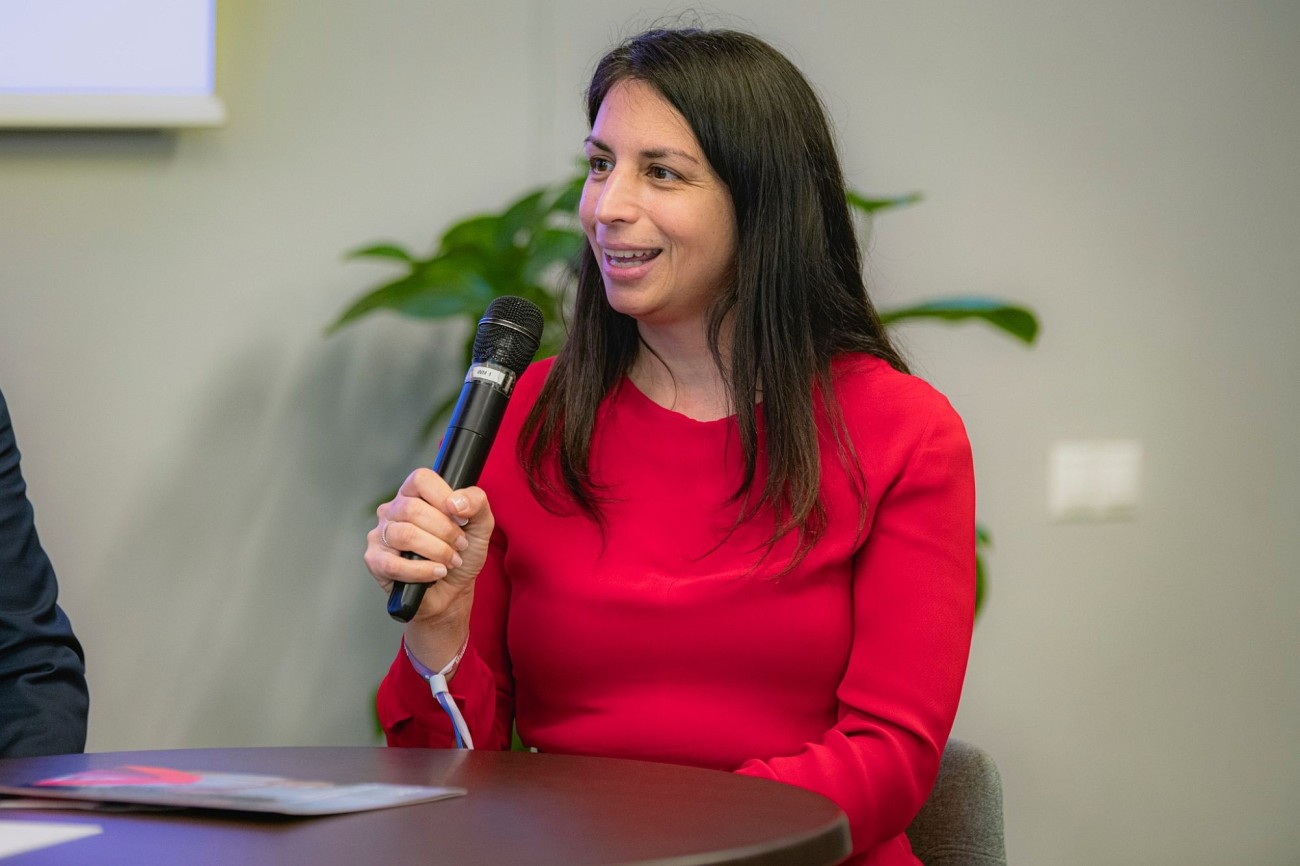
PICTURES: Carol Ann Dykes Louge at the Hungarian Summit event and the "Race is On" Innovation Pitch Day competition. Source: Hungarian Summit